When it comes to replacing or upgrading a stabilizer (anti-roll) bar on your vehicle, one of the most important decisions is whether to use an OEM (Original Equipment Manufacturer) part — i.e. the piece the vehicle maker originally installed — or an aftermarket bar supplied by an independent vendor. Each option carries its own cost structure, trade-offs, and potential benefits. In this article, we analyze the cost vs. benefit of OEM versus aftermarket stabilizer bars, compare their strengths and weaknesses, and help you decide which path may be more suitable depending on your priorities.
What We Mean by OEM vs. Aftermarket Stabilizer Bars
-
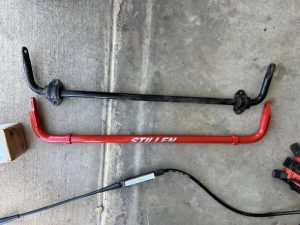
OEM Stabilizer Bars are manufactured (or commissioned) by the same supply chain as the original parts fitted in new vehicles. Their specifications — dimensions, material, stiffness, mounting points, and compliance — are engineered to match the vehicle’s suspension system exactly.
-
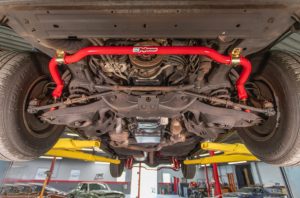
Aftermarket Stabilizer Bars are produced by third-party manufacturers. These parts are sold as replacements, upgrades, or alternatives to OEM bars. The range of aftermarket includes everything from economy budget bars to premium performance-grade bars.
Because the stabilizer bar is a safety- and handling-critical component, the choice between OEM and aftermarket directly influences ride comfort, handling, durability, maintenance cost, and possibly resale value.
OEM vs. Aftermarket: Comparison Table
| Criterion / Factor | OEM Stabilizer Bar | Aftermarket Stabilizer Bar |
|---|---|---|
| Fit & Compatibility | Exact fit for vehicle model and suspension spec | Varies: many are direct-fit, some require slight adjustments or modifications |
| Quality & Compliance | Built to manufacturer standards with certification and testing | Quality varies: ranges from budget copies to premium upgrades; consistency depends on brand |
| Cost (Purchase Price) | Typically higher — dealership or authorized-supplier pricing | Often significantly cheaper — competitive aftermarket pricing |
| Repair & Replacement Costs | Lower risk of premature failure → less frequent replacement | Potentially lower cost of part, but may wear faster (depending on quality) |
| Availability | Available through dealers — sometimes limited for older models | Wide availability through many suppliers, including online shops and independent retailers |
| Performance / Customization | As-designed factory performance — balancing comfort, control, longevity | Potential for performance upgrades, firmer or tuned handling, or specialized applications (sport, heavy-duty, off-road) |
| Regulatory & Safety Assurance | Meets original safety and compliance requirements | Depends on manufacturer — may or may not meet same safety/regulatory specs |
Benefits of Choosing OEM Stabilizer Bars
-
Assured Fit & Compatibility — OEM bars are guaranteed to match your vehicle’s suspension specs precisely, minimizing the risk of fitment issues or incorrect geometry.
-
Reliable Quality & Consistency — Because OEM parts are tested under manufacturer standards and supply-chain quality controls, they are less likely to suffer premature fatigue, misalignment, or failure.
-
Long-Term Durability & Warranty Alignment — OEM parts are generally designed for long service life under typical driving conditions, reducing maintenance frequency and long-term ownership risk.
-
Resale Value / Originality Preservation — Using OEM parts helps maintain the factory-spec integrity of the vehicle, which may be important for resale value or for buyers who prefer “stock” condition.
For many owners, especially those planning to keep their vehicles long-term or who prioritize reliability, OEM stabilizer bars represent a “set and forget” solution.
Advantages (and Trade-offs) of Aftermarket Stabilizer Bars
Aftermarket stabilizer bars are popular for a variety of reasons:
• Cost Savings
Aftermarket bars tend to be significantly cheaper than OEM — appealing to budget-conscious owners or those maintaining older vehicles.
• Wider Availability & Variety
Because of many aftermarket suppliers, there is a broader selection: direct-fit replacements, performance/tuned versions, heavy-duty upgrades, or bars optimized for specific driving styles (sport driving, off-road, towing, etc.).
• Potential for Performance Improvement
Some aftermarket bars — especially premium or performance-grade ones — may offer enhanced roll resistance, stiffer handling, or improved responsiveness vs. stock bars. This can be attractive to enthusiasts or drivers wanting sharper handling.
• Good Value When Quality Matters
High-quality aftermarket parts from reputable brands can deliver durability and performance comparable to OEM — especially if you avoid extremely cheap parts with sub-standard materials.
However — the upside often comes with trade-offs: quality and longevity may vary widely; fitment or alignment can be less exact; some aftermarket parts may not meet full safety certifications; and maintenance or replacement frequency may increase.
When Aftermarket Makes Sense — and When to Opt for OEM
Good scenarios for Aftermarket:
-
You drive an older or high-mileage vehicle and want a cost-effective replacement.
-
You’re comfortable selecting a reputable aftermarket brand rather than the cheapest option.
-
You want to upgrade handling, reduce body roll, or customize suspension behavior (e.g., for sporty driving, towing, or heavier loads).
-
OEM parts are expensive or hard to source for your vehicle.
Better to stick OEM if:
-
You care about original ride quality, manufacturer-approved specs, and minimal installation risk.
-
You plan to keep the vehicle long-term and want minimal maintenance / replacement frequency.
-
The vehicle is under warranty or resale value matters.
-
You’re unsure of aftermarket part quality or compatibility, and safety/reliability are the top priorities.
Cost vs. Benefit — A Practical Analysis
Let’s consider a simplified example comparing total cost over a hypothetical 100,000 km (or several years) usage:
-
OEM bar: higher upfront cost but longer life, fewer replacements → lower lifetime maintenance cost.
-
Cheap aftermarket bar: lower upfront cost but higher failure/replacement rate → might need replacement once or twice, possibly negating savings.
-
Quality aftermarket bar (mid- to premium-range): moderate upfront cost, good durability — often represents the best compromise between cost and performance.
When computed over time, a well-chosen aftermarket bar may deliver comparable durability and save money, but cheap, low-quality bars risk repeat expenses and potential safety issues.
Other Factors to Consider
-
Fitment accuracy & suspension geometry: Improperly fitted bars may cause noise, poor handling, or accelerated wear of bushings/joints.
-
Material quality & fatigue resistance: OEM bars typically use proven materials and manufacturing processes; cheaper aftermarkets may use lower-grade steel or materials prone to corrosion or premature fatigue.
-
Availability of associated components: When replacing a stabilizer bar, it may be wise to also check the condition of bushings, links, and mounting hardware — using OEM or high-quality aftermarket replacements alike.
-
Warranty and support: OEM parts often come with warranty coverage or dealer support; aftermarket parts’ warranty and support vary by manufacturer.
-
Intended use: Daily commuting, highway driving, sport driving, towing, off-roading — each use case may favor different types of stabilizer bars (stock vs. upgraded).
Where to Look for Aftermarket Stabilizer Bars
If you are considering aftermarket stabilizer bars for replacement or upgrade — whether for standard use, performance enhancement, or EV conversions — there are many suppliers online. As a starting point, you may browse available options at a reputable parts store offering a variety of stabilizer and suspension components: Buy Stabilizer & Components online.
Summary: Pros & Cons at a Glance
OEM Stabilizer Bars
-
Pros: guarantee fit & compliance, proven durability, minimal risk, ideal for long-term, stock-condition vehicles.
-
Cons: higher cost, less variety, limited to stock performance.
Aftermarket Stabilizer Bars
-
Pros: cost-effective, wide selection, potential performance gains, good value for quality parts.
-
Cons: variable quality, fitment or specification risk, potentially lower long-term reliability if cheap parts are chosen.
Conclusion
Choosing between OEM and aftermarket stabilizer bars is a classic trade-off between cost, reliability, customization, and risk. For many everyday drivers — especially those with older vehicles or limited budgets — a well-chosen aftermarket bar from a reputable supplier offers excellent value and performance. On the other hand, for those who prioritize longevity, original ride characteristics, easy maintenance, or resale value, OEM bars remain a strong and often safer bet.
Ultimately, the right choice depends on your vehicle’s condition, how you drive it, and what you value most: cost savings, a stock-like feel, or performance upgrades. If you decide to explore aftermarket options or need to replace worn stabilizer bars — it’s worth reviewing quality, materials, and compatibility before purchasing. And to begin that search, you can explore a selection of stabilizer components at: Buy Stabilizer & Components online.
In the balancing act of cost vs benefit, smart owners will weigh upfront savings against long-term durability and safety — and choose accordingly.