As the automotive industry moves toward lighter, more efficient, and greener vehicles — particularly with the rise of electric vehicles (EVs) — traditional steel stabilizer bars (also called anti-roll or sway bars) are coming under reevaluation. Advances in materials science and composite manufacturing make it possible to produce stabilizer bars using materials like carbon fiber, glass-fiber composites, and hybrid composite-metal designs — offering benefits in weight, durability, corrosion resistance, and performance tuning. In this article, we explore how next-generation materials are changing stabilizer bar manufacturing, the benefits and challenges of these innovations, and what the future may hold.
Background: What is a Stabilizer Bar — and Why Material Matters
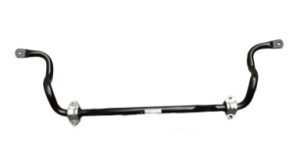
A stabilizer bar (anti-roll bar) is a torsion spring that connects opposite wheels via the suspension to resist body roll during cornering or uneven roads. Its stiffness, geometry, and material determine how effectively it reduces roll while preserving ride comfort and handling balance.
Traditionally, these bars have been made from solid steel tubes. Steel is strong, durable, and relatively cheap — but heavy, prone to corrosion (especially underbody), and inflexible once manufactured. As vehicle architecture evolves (lighter chassis, EV battery packaging, different weight distribution), these limitations become more pronounced.
By shifting to advanced materials — composites, carbon fiber, hybrid structures — manufacturers can significantly change the behavior and advantages of stabilizer bars.
Next-Generation Materials & Manufacturing Techniques
Here are some of the main material and manufacturing trends emerging in stabilizer bar design:
-
Carbon Fiber Reinforced Polymer (CFRP) and other composite materials.
-
Glass-Fiber Reinforced Plastics (GFRP).
-
Hybrid composite-metal designs (composite tube + metal end fittings).
-
Forged composite (chopped carbon fiber + resin) — enabling complex shapes.
-
Hollow or variable-thickness composite tubes, optimizing torsional stiffness while minimizing weight and unsprung mass.
Manufacturing processes vary: from filament winding and resin transfer for composite tubes, to bonding composite tubes with metal end-arms (for robust attachment to suspension links). Hybrid composite-metal bars combine the high torsional stiffness and fatigue resistance of composites with the proven interfacing strength of metal components.
Advantages of Composite and Next-Gen Stabilizer Bars
Switching from traditional steel to composites and hybrid materials offers several tangible benefits:
-
Significant weight reduction — composite stabilizer bars can weigh 30–50% less than equivalent steel bars.
-
Lower unsprung and overall mass — reducing mass under the chassis improves handling, ride comfort, and responsiveness (especially important for EVs with heavy battery packs).
-
Corrosion resistance and durability — composites resist rust and fatigue better than steel, promising longer lifespan and reduced maintenance.
-
Design flexibility — composite tubes can have variable cross-sections, wall thicknesses, or non-circular geometries; hybrid solutions allow combining composite torsion elements with metal attachments for robustness.
-
Improved ride quality and tuning potential — lighter, stiffer, yet more compliant suspension components can allow softer springs or dampers, leading to better comfort without sacrificing stability.
Traditional vs Next-Gen Stabilizer Bars: A Comparison
| Parameter / Property | Traditional Steel Bars | Next-Gen Composite / Hybrid Bars |
|---|---|---|
| Material | Solid steel tube | CFRP, GFRP, hybrid composite-metal, forged composite |
| Weight | Heavy — adds significant unsprung mass | 30–50% lighter ➝ reduced unsprung mass & inertia |
| Corrosion resistance | Prone to rust | High resistance to corrosion, moisture, fatigue |
| Durability / Fatigue resistance | Good but limited by steel fatigue & corrosion | Better fatigue resistance, longer lifespan |
| Manufacturing flexibility | Fixed geometry after machining/bending | Variable cross-section, shape flexibility |
| Ride / Handling impact | Higher weight — more inertia | Lightweight — better handling, agility |
| Cost and complexity | Cheap, well-established | More complex manufacturing; higher cost |
Examples & Real-World Applications
-
Mubea — a known supplier — offers GFRP longitudinal and transverse leaf springs, and even CFRP stabilizer bars, claiming up to 50% weight reduction compared to steel.
-
The AMRC Composite Centre (with partners) developed a hybrid composite-metal anti-roll bar under the LiMeCH project, aimed at heavy-duty road and rail vehicles. Their prototype reportedly achieved about 30% weight reduction compared to conventional steel ARBs without compromising load-bearing capacity.
-
Research & engineering studies (e.g., design optimization papers) demonstrate that composite anti-roll bars can be tuned to match torsional rigidity requirements while significantly reducing mass.
These real-world efforts signal that composite stabilizer bars are no longer a theoretical luxury — they are becoming practically viable for production vehicles. As EVs and lighter chassis designs proliferate, the impetus for such materials only grows.
Challenges and Considerations
While next-generation materials bring many benefits, some challenges must be addressed:
-
Manufacturing complexity and cost — composite or hybrid bars require specialized production (filament winding, bonding, resin curing), which is more expensive and time-consuming than bending a steel tube.
-
Interface and joint design — bonding composite tubes to metallic end-arms must ensure robust load transfer and resist fatigue, moisture ingress, and environmental conditions. Mistakes can lead to premature failure.
-
Material behavior under torsion and impact — composites may behave differently than steel under shock loads, abrupt torsion, or repeated flexing; long-term fatigue testing is essential.
-
Repairability and inspection — composite components may be harder to inspect or repair than metal parts; damage may not be visually apparent and may require specific non-destructive testing.
-
Cost-benefit for mass-market vehicles — for economy or low-cost cars, the added expense of composites may outweigh benefits; thus adoption may start in premium, performance-oriented, or EV segments.
Looking Ahead: What the Future Holds
Given the trajectory of research and industry adoption, here’s what we can expect for stabilizer bar manufacturing in coming years:
-
Wider adoption in EVs and lightweight vehicles: As EVs carry heavy batteries and weigh more, saving weight elsewhere (suspension, chassis) becomes critical. Composite/hybrid stabilizer bars help offset battery mass and preserve performance.
-
Hybrid suspension systems: Combined with adaptive dampers, active anti-roll control, and smart chassis electronics — composite stabilizer bars may be part of fully integrated suspension modules optimized for ride, comfort, efficiency, and safety.
-
Standardization of composite ARBs for trucks, buses, and heavy-duty vehicles: Projects like LiMeCH show that even heavy vehicles can benefit from hybrid bars — leading to fuel (or electricity) savings, improved payload efficiency, and lower emissions over fleet lifetime.
-
Economies of scale and cost reduction: As manufacturing processes mature and scale up, cost of composite components will decrease, making them viable even for mid-range vehicles.
-
Sustainability and recyclability: Composite materials — especially if designed for recyclability or made from recycled fibers — can contribute to more sustainable vehicle life-cycles.
Why It Matters — Even for Aftermarket & Retrofits
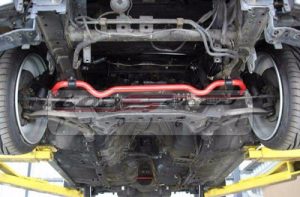
For vehicle builders, tuners, and aftermarket suppliers — whether for EVs, performance cars, or heavy-duty vehicles — understanding next-generation stabilizer bar materials is important. Upgrading to composite or hybrid stabilizer bars can deliver:
-
Reduced unsprung mass → better suspension response
-
Longer component lifespan → less corrosion, less maintenance
-
Possibility of softer ride or improved handling without increasing ride harshness
-
Weight savings that can help offset added load from batteries, cargo, or accessories
If you’re interested in exploring stabilizer bar and suspension component options, starting with an online supplier that carries EV-ready or composite-ready stabilizer parts may be worthwhile. You can begin by checking selections at: Buy Stabilizer & Components online
Conclusion
The shift from traditional steel to advanced composites and hybrid materials for stabilizer bars marks a significant evolution in automotive suspension design. By leveraging materials such as carbon fiber, glass-fiber composites, and hybrid composite-metal structures, manufacturers can create anti-roll bars that are lighter, more durable, corrosion-resistant, and better suited to modern vehicle demands — especially in the context of EVs, lighter chassis, and performance optimization.
While challenges in manufacturing complexity, cost, and long-term fatigue behavior remain, real-world projects and research (e.g., from Mubea, AMRC, LiMeCH) demonstrate that these solutions are technically feasible and increasingly practical. As composite fabrication becomes more widespread and economically viable, we anticipate a growing adoption of composite/hybrid stabilizer bars — initially in EVs, heavy vehicles, and premium segments, but eventually across many vehicle types.
For builders, tuners, and vehicle owners looking to leverage advances in materials technology, upgrading to composite or hybrid stabilizer bars offers a promising path toward improved handling, comfort, and suspension longevity — all while helping offset the weight of modern powertrains or payloads. In the near future, the stabilizer bar may evolve from a simple steel torsion rod to a smart, lightweight, and high-performance component — a small but significant step in the broader transformation of automotive design.
If you’re considering stabilizer upgrades or exploring EV-ready components, checking reputable suppliers and composite-compatible stabilizer sets is a smart place to start.